

Seeing a fast-moving pest disappear across a basement or bathroom floor can make identification difficult. Two pests homeowners may confuse are house centipedes and silverfish. Both tend to favor dark, damp areas and may appear unexpectedly in basements, bathrooms, utility rooms, or storage areas. However, their appearance, behavior, diet, and potential impact on household belongings are very different.
Understanding centipedes vs. silverfish can help homeowners determine what they are seeing and which conditions may be encouraging pest activity. Correct identification is particularly useful before choosing a control approach because a pest that hunts other insects requires different attention from one that feeds on materials containing starches and carbohydrates.
What Does a House Centipede Look Like?
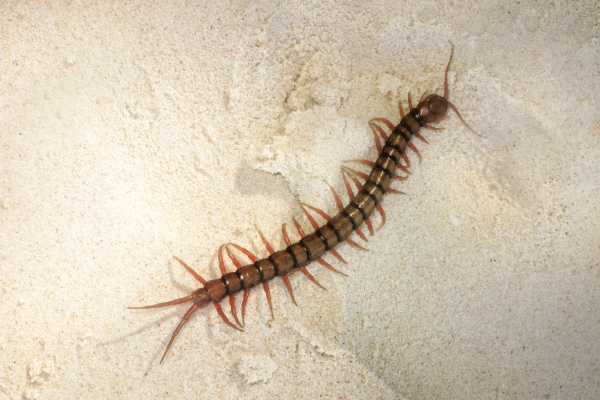
 Learning how to identify house centipedes starts with their most noticeable feature: their many long legs. House centipedes have elongated, flattened bodies with 15 pairs of legs. Their rear legs can be especially long, contributing to an appearance that homeowners often describe as larger than the body itself.
House centipedes also have long antennae and move very quickly when disturbed. They may remain hidden during the day and emerge at night to search for prey.
When comparing centipedes vs. silverfish, movement provides an immediate clue. House centipedes often seem to sprint across walls or floors because their numerous legs allow them to move rapidly.
They are predators rather than pests that feed on household materials. House centipedes hunt insects, spiders, and other small arthropods that may already be living inside a home.
How to Identify Silverfish
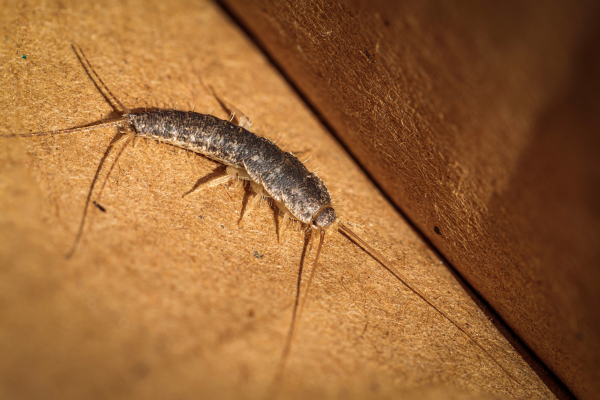
Learning how to identify silverfish requires looking for a very different body shape. Silverfish are small, wingless insects with flattened, tapered bodies. They generally have a silvery or gray appearance and three long bristle-like appendages extending from the rear of the body.
Silverfish also have long antennae, but unlike house centipedes, they have six legs rather than many pairs of visibly extended legs. Their bodies move with a distinctive wiggling motion that can resemble a fish swimming.
Prevent Pest Control identifies silverfish as moisture-loving household pests in its resource on common winter pests, noting their tendency to appear in dark, damp places such as basements, bathrooms, and kitchens.
The Difference Between Centipedes and Silverfish
The clearest difference between centipedes and silverfish is their basic anatomy. House centipedes have many pairs of long legs extending from the sides of the body, while silverfish are six-legged insects with three noticeable appendages at the rear.
Their diets are also different. House centipedes hunt other small pests. Silverfish feed on materials containing carbohydrates and starches, which may include paper products, book bindings, wallpaper adhesives, some fabrics, and certain stored materials.
That distinction is important when considering centipedes vs. silverfish in a home. A house centipede may suggest that other arthropods are available as prey, while silverfish activity may be associated with moisture and access to suitable food materials.
Why Are They Both Found in Damp Areas?
Although these pests behave differently, moisture creates an important overlap. Both may favor environments where humidity is relatively high and hiding places are available.
Basements can provide these conditions, particularly around utility areas, stored boxes, floor drains, plumbing, or spaces with limited ventilation. Bathrooms, laundry areas, crawl spaces, and kitchens may also provide moisture.
Prevent Pest Control discusses moisture management as an important component of general household pest prevention in its guide to staying one step ahead with preventative pest control.
If homeowners repeatedly find centipedes vs. silverfish in the same part of the house, investigating moisture conditions can provide more useful information than simply removing the individual pests that are visible.
What Does Their Movement Tell You?
Behavior can help when the pest disappears before you can inspect it closely.
House centipedes are remarkably fast and may race across a floor or up a wall when lights are switched on. Their long legs are usually noticeable even during a brief sighting.
Silverfish also move quickly, but their movement appears more side-to-side or wriggling. Their bodies remain close to the surface, and the three rear appendages may be visible if you get a clear look.
When homeowners are unsure how to identify silverfish, taking a photograph from a safe distance can sometimes make identification easier than attempting to catch a moving insect.
Can Centipedes or Silverfish Damage Household Items?
This is another important difference between centipedes and silverfish.
House centipedes generally do not feed on furniture, books, clothing, wood, or stored food. Their diet consists primarily of other arthropods.
Silverfish can feed on materials that contain starches or carbohydrates. Books, paper, wallpaper, cardboard, stored fabrics, and other materials may therefore be affected when silverfish remain active over time.
The distinction means that centipedes vs. silverfish should not automatically be treated as interchangeable nuisance pests. Identifying which one is present can help homeowners decide what belongings, storage areas, and environmental conditions should be inspected.
Why Does Seeing Centipedes Sometimes Suggest Other Pests?
Because house centipedes are predators, repeated sightings may mean that the home provides a consistent supply of prey. Small insects and spiders can remain hidden beneath fixtures, behind walls, around plumbing, or inside storage areas even when homeowners do not regularly see them.
Understanding how to identify house centipedes can therefore provide more than the name of the pest. Their presence may be a reason to watch for ants, silverfish, cockroaches, spiders, or other arthropods.
However, seeing one centipede does not prove that another pest infestation exists. Occasional individuals may simply enter from outside or move through hidden structural spaces.
Why Are Silverfish Often Associated With Stored Items?
Silverfish prefer concealed areas and can remain near materials that provide both food and shelter. Cardboard boxes, books, papers, stored clothing, and similar belongings may create conditions where they can remain unnoticed.
Replacing damp cardboard storage with appropriate sealed containers and reducing unnecessary clutter can make monitoring easier. Homeowners may also want to inspect storage areas periodically for pest activity or moisture.
Prevent Pest Control provides broader household guidance in its article on tips to prevent pests in your home, including sanitation, inspection, and attention to conditions that may support indoor pests.
 What Should You Do After Identifying the Pest?
Once you understand centipedes vs. silverfish, begin by examining the environment where the pest was found. Look for moisture, condensation, plumbing leaks, excessive humidity, clutter, cardboard storage, and evidence of other insects.
Homeowners may choose to address maintenance concerns such as moisture sources, damaged screens, cracks, or other structural openings separately. These are property-maintenance tasks and should not be assumed to be part of a pest-control service.
Vacuuming visible pests and reducing clutter may also make activity easier to monitor. Avoid applying pesticides without first identifying the pest and reading all label directions.
When Pest Identification Is Uncertain
Sometimes a brief sighting is not enough to determine which pest is present. Shed skins, damaged stored materials, repeated sightings, and the specific location of activity can provide additional clues.
For centipedes vs. silverfish, the easiest visual distinction remains the legs and body shape: house centipedes have numerous long legs, while silverfish have six legs, a tapered body, and three rear appendages.
If you continue seeing unidentified crawling pests or silverfish activity around your Northeast Ohio home, Prevent Pest Control provides general pest-control services and lists silverfish among the pests it addresses. For help evaluating pest activity, contact Prevent Pest Control through its website or call (440) 322-0887.
Frequently Asked Questions
1. Are house centipedes and silverfish the same pest?
No, house centipedes and silverfish are different pests with distinct body shapes, diets, and behaviors. House centipedes have many long legs and prey on other arthropods, while silverfish have six legs, tapered bodies, and three rear appendages. Comparing centipedes vs. silverfish by appearance is usually the fastest way to tell them apart.
2. Which pest is more likely to damage books or paper?
Silverfish are more likely to damage paper-based materials because they can feed on substances containing starches and carbohydrates. Books, cardboard, wallpaper adhesives, and some stored fabrics may be affected. House centipedes do not typically feed on these materials because they are predators that hunt other small pests.
3. Can house centipedes and silverfish live in the same area?
Yes, house centipedes and silverfish may be found in the same damp or dark areas, especially basements, bathrooms, and storage spaces. Their presence together is possible because both may favor moisture, while silverfish can also serve as prey for house centipedes. Shared habitat does not mean they have the same behavior or treatment needs.
4. How can I identify silverfish if I only see one briefly?
Look for a small, wingless insect with a tapered body, silvery or gray coloring, long antennae, and three bristle-like appendages at the rear. Learning how to identify silverfish often depends on noticing body shape and movement rather than size alone. A clear photograph may also help with identification after a quick sighting.
5. How can I identify a house centipede at night?
A house centipede is usually recognizable by its many long legs, flattened body, long antennae, and very fast movement. Learning how to identify house centipedes is often easier when the pest crosses an open floor or wall. The numerous legs are the strongest visual difference from silverfish and many other household pests.
6. Do silverfish mean my home has a moisture problem?
Silverfish may indicate damp or humid conditions, but their presence does not always confirm a serious moisture problem. They often prefer basements, bathrooms, laundry areas, and other spaces where humidity is higher. Repeated sightings may justify checking for condensation, plumbing leaks, damp storage materials, or poor ventilation.
7. Do house centipedes mean there are other insects in my home?
House centipedes may suggest that other small arthropods are available as prey, but one centipede does not confirm another infestation. They feed on insects, spiders, and similar pests. Frequent sightings may make it worthwhile to monitor for additional pest activity, especially in damp or undisturbed areas.
8. Can vacuuming help with centipedes or silverfish?
Vacuuming can remove visible centipedes, silverfish, shed material, and some debris from areas where pests hide. However, vacuuming alone may not address moisture, food sources, clutter, or recurring pest activity. It is generally more useful as part of broader monitoring and household sanitation rather than as a complete solution.
9. Why do I keep seeing silverfish in cardboard boxes?
Silverfish may remain around cardboard boxes because the area can provide both shelter and access to materials they can feed on. Damp storage conditions may make the space even more favorable. Replacing damaged or damp cardboard with appropriate storage containers and reducing clutter may make silverfish activity easier to monitor.
10. When should I contact pest control about centipedes or silverfish?
Professional pest control may be appropriate when sightings are frequent, multiple areas of the home are affected, stored materials show damage, or you cannot confidently identify the pest. Prevent Pest Control lists silverfish among the pests it addresses and can be contacted at (440) 322-0887 to discuss recurring household pest activity.

Prevent Pest Control has been proudly serving Ohio communities since 1996, delivering expert pest management solutions backed by over two decades of hands-on experience. Our skilled team is equipped to handle a full range of pest problems, from common household nuisances like ants and spiders to more serious infestations involving rodents, termites, and bed bugs.
We offer reliable, customized treatments for both residential and commercial properties, always focused on safety, effectiveness, and customer satisfaction. Our service area covers much of central and northern Ohio, including major cities such as Cleveland, Columbus, Dayton, and Cincinnati.
Contact Us
We are always here to help. Looking forward to hearing from you!