

If you’re seeing small black ants swarming cracks in your driveway, patio, or sidewalk, you’re likely dealing with one of two common species that do very different damage: pavement ants or carpenter ants.
The problem? Most homeowners in Cleveland, Parma, Lakewood, Westlake, Strongsville, and across Cuyahoga County treat them the same way — and that’s why the problem keeps coming back worse.
At Prevent Pest Control, we treat both pests every spring across Northeast Ohio, and the key difference is simple: pavement ants are a nuisance, but carpenter ants are structural destroyers.
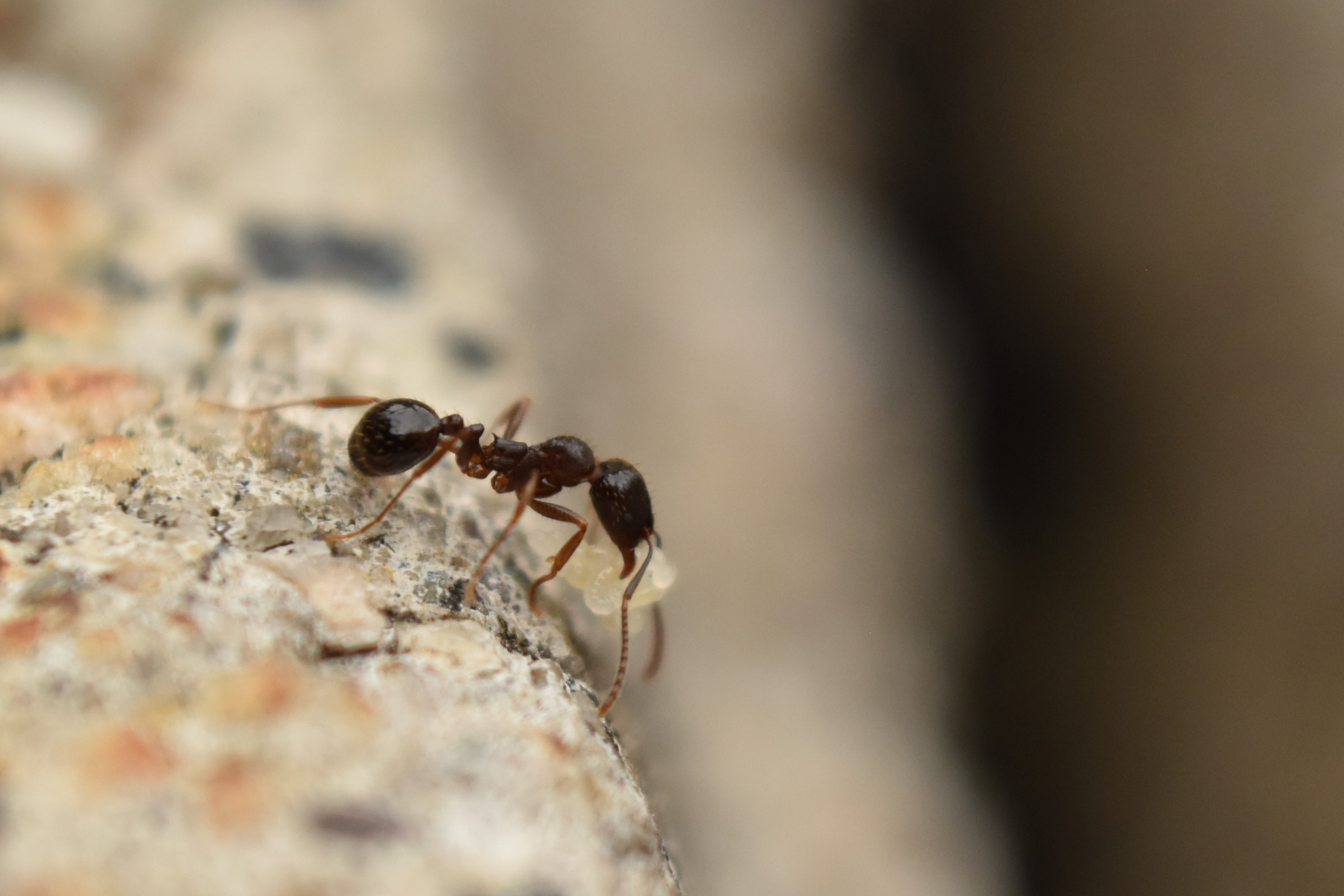 Pavement Ants: The Driveway Swarmers
Appearance
- Size: 1/8 inch long
- Color: Dark brown to black
- Body: Two antennae segments with 12-segmented antennae
- Distinct feature: Parallel grooves on head and thorax
Behavior
- Form long, visible trails from cracks in concrete/driveways to food sources
- Aggressive when disturbed — they swarm and can bite, though bites are mild
- Nest directly under pavement, slabs, or sidewalk blocks, often in sandy soil
Damage
- Minimal structural damage — they move soil particles, which can cause minor cracking in pavement over time
- Nuisance pest — trails can lead indoors to kitchens or bathrooms, contaminating food if they enter
- Not wood-destroyers, but large colonies can undermine sidewalks or patios
Why They Explode in Spring 2026
- Winter nesting under heated slabs keeps them alive
- Spring thaw + warmer days trigger massive foraging activity
- Cracked driveways and patios in older neighborhoods provide perfect nesting sites
Carpenter Ants: The Wood Destroyers
Appearance
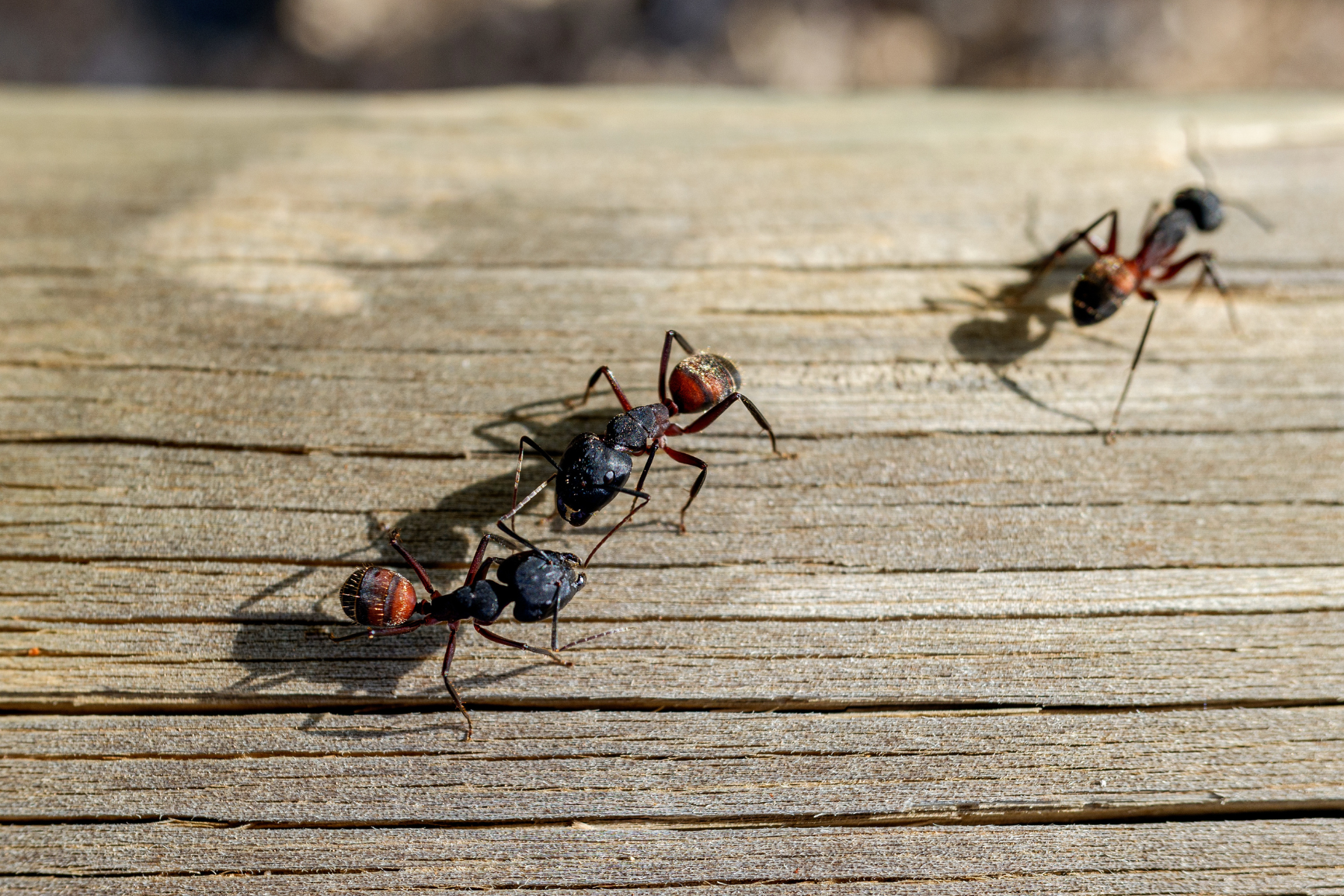
- Size: Much larger, 1/4 to 1/2 inch long
- Color: Black or reddish-black
- Body: Rounded thorax (no grooves)
- Distinct feature: Elbowed antennae and unevenly rounded thorax when viewed from the side
Behavior
- Do not form visible trails on pavement — they forage at night and along tree branches or wires
- If seen on driveway, they’re likely coming from a nearby tree stump, dead wood, or infested deck/porch
- Excavate wood for nests, pushing out frass (sawdust-like material with insect parts)
Damage
- Serious structural damage — they hollow out moist wood in joists, beams, porch posts, and eaves
- Can weaken decks and porches to the point of collapse if untreated
- Satellite colonies inside walls spread from outdoor nests, leading to indoor infestations
Why They’re Active in Spring 2026
- Winter satellite colonies in walls and attics wake up
- They forage farther (300+ feet) in spring, crossing driveways to reach new food or nesting sites
- Moisture from melting snow creates soft wood they prefer for excavating
Quick Identification Chart: Pavement vs. Carpenter Ants
Feature
- Pavement Ants
- Carpenter Ants
Size
- 1/8 inch
- 1/4–1/2 inch
Color
- Dark brown to black
- Black or reddish-black
Thorax grooves
- Yes (parallel lines)
- No (smooth)
Trails on driveway
- Long, visible trails
- Rare — usually solitary or scattered
Nest location
- Under concrete/slab
- In moist wood (trees, decks, walls)
Structural damage
- None to minor (cracking pavement)
- Severe (hollows out wood)
Aggressive when disturbed
- Yes — swarm and bite (mild)
- Less aggressive
Why Treating Them the Same Way Fails
- Pavement ants need targeted crack-and-crevice treatments around slabs to destroy underground colonies
- Carpenter ants require void injections, baiting, and perimeter barriers to reach the queen and satellite nests
- Using the wrong product or method lets the colony survive and rebound stronger, often with increased resistance
Why DIY Carpenter Ant Sprays Fail Every Time
- Store products can’t penetrate deep into galleries where the queen hides
- Killing visible ants does nothing to the colony 30–50 feet away
- Spraying makes ants “bud” — one colony becomes many
- Most over-the-counter chemicals are too weak for Ohio’s large carpenter ant colonies
Why DIY Pavement Ant Baits Fail Every Time
- Pavement ants have massive underground colonies — baits often don’t reach all workers
- Spring foraging is erratic, and ants may ignore baits in favor of natural food
- Without professional barrier treatments, new colonies move in from neighboring yards
- DIY sprays create resistant populations that come back worse
How Prevent Pest Control Delivers Guaranteed Carpenter Ant Elimination
We don’t just kill the ants you see — we eliminate the entire colony.
Our proven spring carpenter ant protocol:
- Full exterior and attic inspection (including eaves and soffits)
- Professional-grade non-repellent insecticides that ants carry back to the nest
- Direct void and gallery treatments (drilling when needed)
- Dust and bait applications in wall voids and structural wood
- Long-lasting exterior perimeter barrier
- Follow-up visits to confirm total colony collapse
No heat. No shortcuts. Just the strongest chemical treatments available to licensed professionals.
 How Prevent Pest Control Delivers Guaranteed Pavement Ant Elimination
Our proven spring pavement ant protocol:
- Inspection of all driveway/sidewalk cracks and slab edges
- Professional non-repellent insecticides applied directly into nesting sites
- Follow-up to confirm colony collapse
Your Spring 2026 Ant Action Plan
Do this the moment the snow melts:
- Walk your entire driveway and sidewalk — look for trails and frass
- Tap porch posts and deck boards for hollow sounds
- Check eaves and soffits for sawdust piles
- Call Prevent Pest Control at (440) 322-0887 at the first sign
Early elimination prevents major structural repairs.
Don’t Let Ants Destroy Your Driveway and Home
A driveway is for parking — not pests. One phone call now can save you major repairs later. Call Prevent Pest Control today at (440) 322-0887 for fast, professional ant elimination across Northeast Ohio. We guarantee your home stays ant-free — or we keep working until it is.
Common FAQS About Ants
-
Why am I seeing ants swarming cracks in my driveway this spring?
Spring thaw and warmer days trigger foraging. You’re likely seeing pavement ants nesting under slabs or carpenter ants foraging from nearby wood sources.
-
How can I tell if the ants in my driveway are pavement ants or carpenter ants?
Pavement ants are tiny (1/8 inch), dark brown/black with parallel grooves on head/thorax and form long visible trails. Carpenter ants are larger (1/4–1/2 inch), black/reddish, no grooves, and rarely form visible trails on pavement.
-
Do pavement ants cause structural damage to my driveway?
Pavement ants cause minimal damage — they move soil and can contribute to minor cracking over time, but they are not wood-destroyers.
-
Can carpenter ants really damage my home if they’re just on the driveway?
Yes. If carpenter ants are on your driveway, they’re likely coming from a nearby tree, stump, deck, or porch — and they can tunnel into moist wood causing serious structural weakening.
-
Why do carpenter ants prefer decks, porches, and eaves in Ohio?
They excavate moist or damaged wood for nests. Ohio’s freeze-thaw cycles crack wood, and spring moisture creates ideal conditions for tunneling.
-
Why don’t store-bought sprays or baits work on these driveway ants?
Pavement ant colonies are underground and massive — baits often don’t reach the queen. Carpenter ants hide deep in galleries — store products can’t penetrate far enough and may cause budding.
-
How does Prevent Pest Control eliminate pavement ants in driveways?
We inspect cracks and slab edges, apply professional non-repellent insecticides directly into nesting sites, and create a perimeter barrier around the foundation.
-
How does Prevent Pest Control eliminate carpenter ants coming from the driveway?
We perform full exterior/attic inspections, use non-repellent insecticides ants carry back to the nest, direct void/gallery treatments, and long-lasting barriers — with follow-ups.
-
How many visits does Prevent Pest Control need to eliminate driveway ants?
Most pavement and carpenter ant jobs are resolved in 1–2 visits.
-
When should I call Prevent Pest Control for ants in my driveway this spring?
At the first sign of trails, frass piles, hollow wood, or winged ants indoors. Call (440) 322-0887 — same-day/next-day service available all spring across Greater Cleveland.

Prevent Pest Control has been proudly serving Ohio communities since 1996, delivering expert pest management solutions backed by over two decades of hands-on experience. Our skilled team is equipped to handle a full range of pest problems, from common household nuisances like ants and spiders to more serious infestations involving rodents, termites, and bed bugs.
We offer reliable, customized treatments for both residential and commercial properties, always focused on safety, effectiveness, and customer satisfaction. Our service area covers much of central and northern Ohio, including major cities such as Cleveland, Columbus, Dayton, and Cincinnati.
Contact Us
We are always here to help. Looking forward to hearing from you!