

If you’ve ever found a tick while spending time in your yard, you may have wondered how it got there in the first place. Questions like “how far do ticks travel,” “do ticks travel on lawns,” “how far can a tick crawl,” “tick range in yard,” and “how do ticks get into yards” are common among homeowners, especially during the warmer months.
Many people imagine ticks moving long distances across a property in search of people or pets. In reality, ticks have a very different way of finding hosts. Rather than actively chasing animals or crawling across large areas, they rely heavily on wildlife and favorable habitat to move around.
Understanding how ticks behave can help homeowners better recognize where ticks are likely to be found and what conditions make a yard more attractive to them.
How Do Ticks Move?
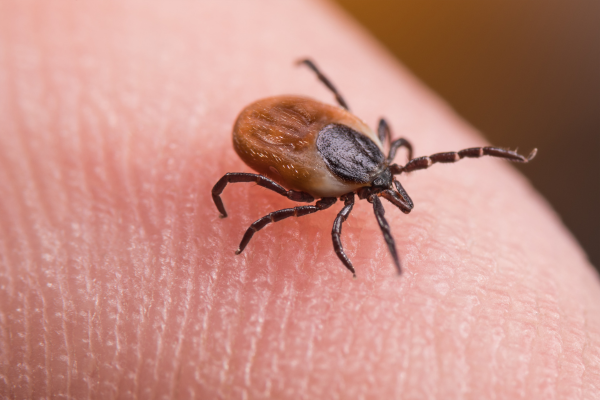
To answer the question, “how far do ticks travel?”, it’s important to understand that ticks are not fast-moving insects. In fact, ticks are arachnids, making them more closely related to spiders than insects.
Ticks cannot jump or fly. They also do not move quickly across open ground. Instead, they crawl relatively short distances and spend much of their time waiting for a suitable host to pass by.
This behavior is known as “questing.” During questing, a tick climbs onto grass, shrubs, or low vegetation and extends its front legs, waiting to latch onto an animal or person that brushes past.
Because of this behavior, the answer to “how far can a tick crawl” is often much shorter than many homeowners expect.
How Far Can a Tick Crawl?
Many homeowners ask, “how far can a tick crawl?”
Ticks are capable of crawling, but they generally do not travel long distances across open lawns on their own. Instead, they tend to remain within favorable habitat where humidity, shade, and vegetation help them survive.
Rather than crawling across an entire yard, ticks typically move only short distances before climbing vegetation to wait for a passing host.
This means that when considering how far do ticks travel, the greater movement usually comes from the animals carrying them rather than the ticks themselves.
 How Do Ticks Get Into Yards?
Perhaps the more important question is “how do ticks get into yards?”
Ticks rarely arrive because they crawled there from a distant location. Instead, wildlife transports them.
Common tick carriers include:
- Deer
- Mice
- Chipmunks
- Squirrels
- Rabbits
- Raccoons
- Opossums
- Birds
- Stray pets
As these animals move through neighborhoods, wooded areas, parks, and backyards, ticks may detach and remain behind.
This is why homeowners frequently ask how do ticks get into yards, even when they have no pets of their own.
Do Ticks Travel on Lawns?
Many homeowners ask, “do ticks travel on lawns?”
Ticks can certainly be found on lawns, but they usually do not spend much time crossing open, sunny grass.
Ticks prefer humid environments because they lose moisture quickly in direct sunlight. As a result, they are far more likely to remain near shaded areas than to crawl across large sections of exposed lawn.
When discussing do ticks travel on lawns, it’s important to remember that the lawn itself is often less attractive than the edges surrounding it.
Wooded borders, shrubs, ornamental grasses, landscaping beds, and leaf litter usually provide much better habitat than short-cut grass.
Understanding Tick Range in Yard
The phrase “tick range in yard” refers to where ticks are most likely to be found around residential properties.
Ticks are rarely distributed evenly across an entire yard.
Instead, they concentrate in areas that provide:
- Shade
- Moisture
- Leaf litter
- Dense vegetation
- Wildlife activity
- Tall grasses
- Brush piles
The tick range in yard often follows the same routes used by wildlife traveling across the property.
For example, deer may consistently travel along the edge of a wooded property, while rodents move through landscaping or beneath decks.
These travel corridors often become areas where ticks are most commonly encountered.
Why Yard Edges Matter
When asking how far do ticks travel, homeowners should pay close attention to the perimeter of the property.
The transition zone between wooded areas and maintained lawns is often where tick activity is highest.
These edges provide:
- Moderate shade
- Higher humidity
- Wildlife movement
- Dense vegetation
Ticks waiting on vegetation in these areas have a greater chance of attaching to passing animals or people.
Because of this, homeowners should be especially cautious when walking along wooded borders or working in landscaping near tree lines.
Do Ticks Stay in One Place?
Ticks spend much of their life relatively stationary.
After being deposited by a host animal, they often remain in favorable habitat while waiting for another host to pass nearby.
This explains why the answer to how far can a tick crawl is generally “not very far.”
Ticks depend much more on host animals than on their own movement.
When a deer, rabbit, or mouse carries a tick into a yard, that animal effectively extends the tick’s travel range.
Weather Can Affect Tick Activity
Weather also influences the tick range in yard.
Ticks are most active when humidity is relatively high.
Periods of rain followed by warm temperatures often create favorable conditions.
Conversely, hot, dry conditions may cause ticks to retreat deeper into shaded vegetation where moisture levels remain higher.
This is another reason why homeowners may notice ticks concentrated in certain areas while other parts of the yard remain relatively free of activity.
Landscaping That Encourages Tick Activity
Certain landscape features make yards more attractive to ticks.
These include:
- Thick ground cover
- Leaf piles
- Dense shrubs
- Brush piles
- Overgrown grass
- Wooded borders
- Stone walls
- Unmaintained landscaping
These environments retain moisture and provide shelter for both ticks and the wildlife that carries them.
Understanding how do ticks get into yards also means recognizing the habitat that encourages wildlife to visit.
Pets Can Bring Ticks Into the Yard
Even if ticks originate elsewhere, pets may introduce them to residential properties.
Dogs especially may pick up ticks during walks, hikes, or visits to parks.
Once they return home, attached ticks may eventually detach somewhere in the yard.
This contributes to the overall tick range in yard and can increase future tick encounters.
Regular veterinarian-recommended tick prevention remains an important part of protecting pets.
Why Tick Encounters Often Surprise Homeowners
Many homeowners believe ticks only exist deep in wooded forests.
However, suburban neighborhoods frequently provide excellent habitat for wildlife.
Even well-maintained properties may border wooded areas, parks, drainage corridors, or natural habitats where wildlife regularly travels.
This helps explain how do ticks get into yards, even when homeowners rarely observe wildlife directly.
Reducing Tick Habitat Around the Home
While no property can be made completely tick-free, homeowners can reduce conditions that favor tick activity.
Helpful practices include:
- Mowing grass regularly
- Removing leaf litter
- Trimming dense vegetation
- Keeping brush piles away from frequently used areas
- Creating separation between wooded areas and lawns
- Discouraging wildlife from lingering near the home
Reducing favorable habitat may help lower the number of ticks encountered around the property.
 Why DIY Tick Control Has Limitations
Many homeowners attempt to manage ticks on their own using over-the-counter products.
While some products may temporarily reduce tick activity, they often do not address the wildlife movement and habitat conditions responsible for introducing ticks to the property.
Because the answer to how far do ticks travel depends heavily on wildlife rather than the ticks themselves, long-term management often involves addressing the broader environment as well.
Professional Tick Control
If ticks are becoming a recurring concern, professional pest control services may help identify areas of increased activity and recommend appropriate treatment options.
Prevent Pest Control provides flea, tick, and mosquito removal services for homeowners throughout Northeast Ohio, including Lorain County, Medina County, Cuyahoga County, and Lake County.
Professional inspections can help identify where ticks are most likely to be encountered and evaluate conditions around the property that may contribute to ongoing tick activity.
Understanding Tick Movement Helps You Stay Prepared
Questions like “how far do ticks travel,” “do ticks travel on lawns,” “how far can a tick crawl,” “tick range in yard,” and “how do ticks get into yards” all point to one important fact: ticks rely far more on wildlife than on their own movement.
Rather than crawling long distances across open lawns, ticks wait patiently in favorable habitat for a host to pass by.
Understanding their behavior helps homeowners recognize higher-risk areas and take practical steps to reduce exposure.
Contact Prevent Pest Control
If you’re noticing ticks around your property or want help managing tick activity, Prevent Pest Control is here to help. Prevent Pest Control serves homeowners throughout Northeast Ohio, including Lorain County, Medina County, Cuyahoga County, and Lake County. To learn more about flea, tick, and mosquito removal services or schedule an inspection, call (440) 322-0887 or visit Prevent Pest Control Flea, Tick & Mosquito Removal.
10 FAQs
-
How far do ticks travel on their own?
Ticks generally crawl only short distances on their own. Most of the distance they travel comes from attaching to wildlife, pets, or people that carry them from one location to another.
-
Do ticks travel on lawns?
Yes, ticks can be found on lawns, but they usually prefer shaded areas with higher humidity. They are more commonly found along wooded edges, landscaping, and tall vegetation than in open, sunny grass.
-
How far can a tick crawl?
Ticks can crawl, but they do not typically travel long distances across a yard. Instead, they climb vegetation and wait for a host to brush past.
-
How do ticks get into yards?
Ticks are commonly brought into yards by wildlife such as deer, mice, rabbits, squirrels, raccoons, birds, and stray animals. Pets can also carry ticks onto residential properties.
-
Where are ticks most commonly found in a yard?
Ticks are often found in wooded borders, leaf litter, tall grass, shrubs, landscaping beds, brush piles, and other shaded areas where humidity is higher.
-
Do ticks prefer sunny or shady areas?
Ticks generally prefer shady, humid environments because they are sensitive to drying out. They are less likely to remain active in hot, open areas exposed to direct sunlight.
-
Can a well-maintained lawn still have ticks?
Yes. Even well-maintained lawns can have ticks if the property borders wooded areas, contains dense landscaping, or experiences regular wildlife activity.
-
Does removing leaf litter help reduce ticks?
Removing leaf litter and trimming dense vegetation can help reduce favorable tick habitat by lowering moisture levels and reducing places where ticks wait for hosts.
-
Can pets increase tick activity around a home?
Yes. Dogs and other pets may pick up ticks while outdoors and bring them back to the yard or home, where attached ticks may later detach.
-
When should I contact Prevent Pest Control about ticks?
If you regularly find ticks around your yard or are concerned about recurring tick activity, contact Prevent Pest Control at (440) 322-0887 for professional flea, tick, and mosquito control services.

Prevent Pest Control has been proudly serving Ohio communities since 1996, delivering expert pest management solutions backed by over two decades of hands-on experience. Our skilled team is equipped to handle a full range of pest problems, from common household nuisances like ants and spiders to more serious infestations involving rodents, termites, and bed bugs.
We offer reliable, customized treatments for both residential and commercial properties, always focused on safety, effectiveness, and customer satisfaction. Our service area covers much of central and northern Ohio, including major cities such as Cleveland, Columbus, Dayton, and Cincinnati.
Contact Us
We are always here to help. Looking forward to hearing from you!