

Termites are among the most destructive pests that can invade your home, often causing significant structural damage before you even realize they’re present. Known as “silent destroyers,” termites work quietly behind walls, beneath floors, and within wooden structures, steadily eating away at the very foundation of your property. Early detection and fast intervention are crucial if you want to protect your home from severe damage and costly repairs.
Many homeowners don’t realize that termites are active year-round, with infestations often peaking during spring and early summer. During this time, colonies expand, and termite swarmers take flight to establish new nests. Understanding how to spot the warning signs of termites — and acting quickly to eliminate them — is essential for protecting your investment.
How to Detect a Termite Infestation
 Detecting termites early can mean the difference between minor repairs and thousands of dollars in structural damage. Since termites are known for remaining hidden, spotting the signs requires a close inspection of key areas in your home.
One of the earliest signs of termite activity is the presence of mud tubes. These pencil-sized tunnels are commonly found along the foundation of your home and act as protective passageways for termites to travel between their colony and food source. If you spot these tubes, it’s a clear sign that subterranean termites are nearby.
Another red flag is hollow-sounding wood. Since termites consume wood from the inside out, wooden beams, walls, and floors may appear normal on the surface while being hollow and weak underneath. Tapping on suspect areas with a screwdriver or blunt object can reveal these internal voids.
If you notice discarded wings near windowsills, doors, or other entry points, it could indicate a recent termite swarm. Termite swarmers shed their wings after finding a suitable site to form a new colony, making discarded wings a strong indicator of termite presence.
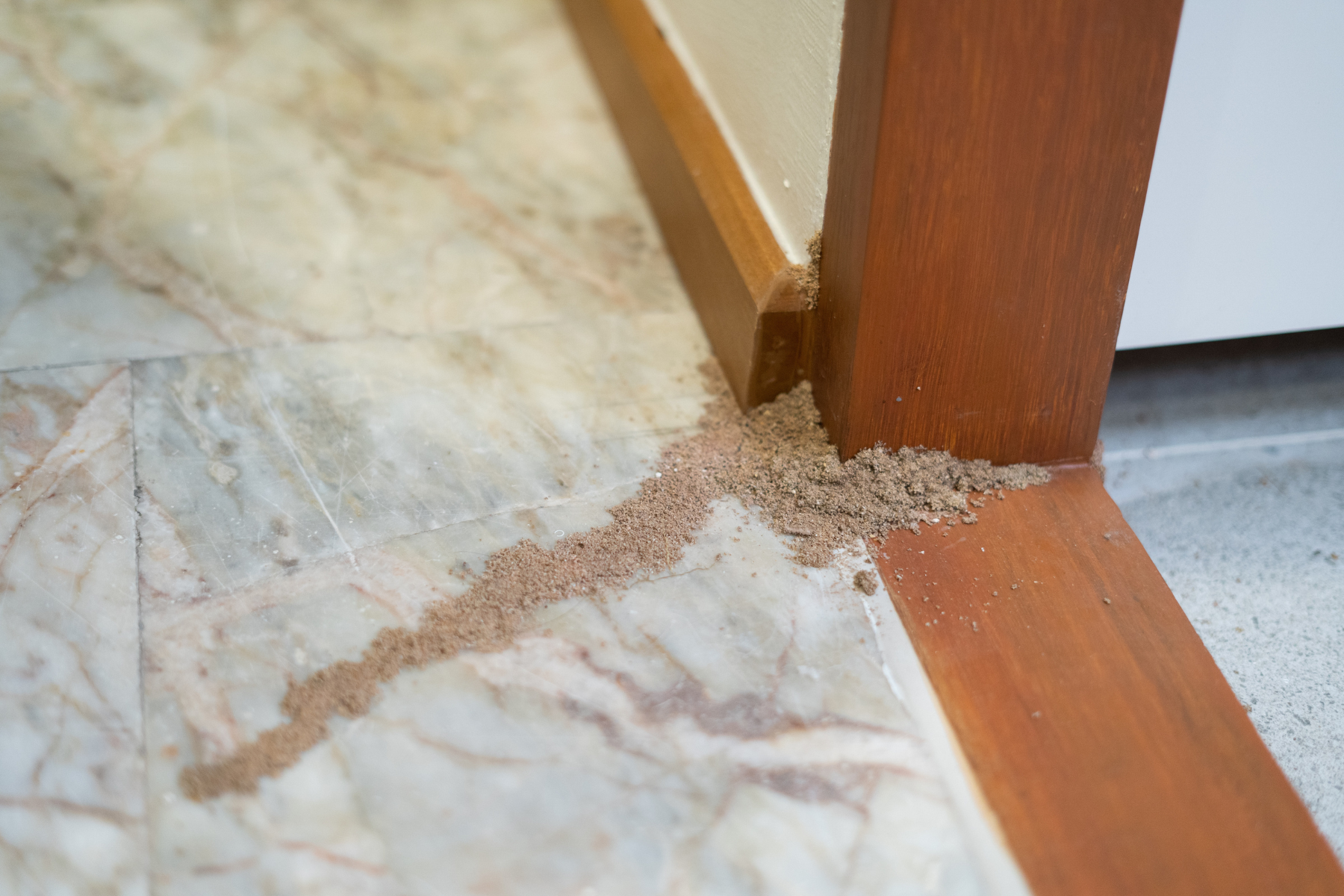
Termite droppings, known as frass, are another common sign. Frass resembles tiny wood-colored pellets and is often found near wooden furniture, door frames, or baseboards. This is a particularly clear sign of drywood termites, which push droppings out of their nests as they tunnel through wood.
Buckling or warped flooring may also signal termite activity, especially if moisture issues are present. As termites consume wooden subflooring, the surface may become uneven or blistered. Warped floorboards, especially in conjunction with other warning signs, should not be ignored.
Finally, homeowners may experience tight-fitting doors or windows that suddenly become difficult to open or close. As termites feed on the internal wood framework, structural shifts may occur, resulting in misaligned frames.
Why Termites Are So Destructive
Termites are particularly dangerous because of their ability to remain undetected for long periods. Their destructive nature lies in their feeding habits — termites consume cellulose, a key component found in wood, drywall, and even some types of insulation. Over time, this behavior can severely weaken structural beams, flooring, and even the foundation of your home.
Subterranean termites — the most destructive termite species in the United States — build massive underground colonies that can contain hundreds of thousands of individuals. These termites tunnel through the soil, creating hidden entry points to reach your home undetected.
Drywood termites, by contrast, build their nests directly within wooden structures, making them difficult to spot without invasive inspection. This species requires minimal moisture, allowing them to survive inside dry wood for extended periods.
Because termite colonies can grow rapidly, delaying treatment can allow the infestation to expand, causing more significant damage. By the time most homeowners realize they have termites, the damage is already extensive.
Preventing a Termite Infestation
Taking steps to deter termites from entering your home is crucial in minimizing your risk of infestation. Start by sealing cracks and gaps around your home’s foundation. Termites can enter through openings as small as 1/16 of an inch, making thorough sealing essential. Pay particular attention to entry points around pipes, utility lines, and crawl spaces.
Reducing moisture levels inside and around your home is another critical step. Termites are attracted to moisture, so ensure leaky pipes, faucets, and clogged gutters are repaired promptly. Installing proper drainage systems can help divert rainwater away from your foundation, further reducing moisture buildup.
Keeping wood and other cellulose-based materials away from your home’s perimeter can also limit termite activity. Firewood, mulch, and wooden debris should be stored at least 20 feet away from your home’s exterior.
Regularly inspect wooden structures for signs of damage. Check wooden fences, decks, and porches for cracks, splinters, or warping, as these areas are prime targets for termite colonies. Addressing early signs of wood deterioration can prevent termites from spreading to other areas of your home.
Lastly, schedule annual termite inspections with a licensed pest control professional. Early detection allows professionals to identify potential entry points, weakened wood, and signs of infestation before major damage occurs.
How to Eliminate Termites from Your Home
If you’ve confirmed termite activity in your home, acting fast is critical to minimizing the damage. While some DIY treatments can reduce termite populations, professional treatment is the most effective solution for fully eliminating an infestation.
One of the most reliable treatment options is liquid termiticide, which is applied to the soil around your home’s foundation. This chemical barrier kills termites on contact and prevents future infestations by creating an impenetrable zone.
For extensive infestations, baiting systems offer an effective solution. These bait stations attract foraging termites, which then return to their colony with the poisoned bait. Over time, this method effectively wipes out the colony.
In severe cases, fumigation may be required to reach hidden termite colonies inside walls, attics, or crawl spaces. While this method requires temporary evacuation, it is highly effective at eliminating even deeply embedded colonies.
After professional treatment, regular maintenance and follow-up inspections are crucial to ensure termites don’t return.
Why Professional Pest Control Is the Best Solution
 Termites are elusive, fast-spreading pests that can cause irreversible damage to your home if not addressed quickly. DIY solutions often fail to reach hidden colonies or fail to provide long-term results. Professional pest control experts have the experience, equipment, and knowledge to target the infestation at its source and implement strategies that prevent reinfestation.
At Prevent Pest Control, our team specializes in detecting and eliminating termite infestations using industry-approved methods designed for long-term protection. Our technicians conduct thorough inspections, identify entry points, and create customized treatment plans that eliminate termites and protect your home from future threats.
Contact Prevent Pest Control for Expert Termite Removal
Contact Prevent Pest Control today for a professional inspection and effective termite treatment plan. Our experienced technicians will eliminate existing colonies and help you prevent future infestations. Visit Prevent Pest Control or call us now to protect your home before termites take over.

Prevent Pest Control has been proudly serving Ohio communities since 1996, delivering expert pest management solutions backed by over two decades of hands-on experience. Our skilled team is equipped to handle a full range of pest problems, from common household nuisances like ants and spiders to more serious infestations involving rodents, termites, and bed bugs.
We offer reliable, customized treatments for both residential and commercial properties, always focused on safety, effectiveness, and customer satisfaction. Our service area covers much of central and northern Ohio, including major cities such as Cleveland, Columbus, Dayton, and Cincinnati.
Contact Us
We are always here to help. Looking forward to hearing from you!