

Most people associate ants with summer picnics and warm kitchen counters, so finding a line of them in January can be confusing. Ants in the house in winter are not unusual in Ohio, but they are often a sign of something more than a few stray insects. In many cases, winter activity points to ants that are living inside the home rather than wandering in from outdoors. If you are seeing ants during the colder months, Prevent Pest Control provides carpenter ant removal and ant control for homeowners across Ohio.
What Ants Normally Do in Winter
Ants are cold-blooded, which means their body temperature and activity level depend on their surroundings. When Ohio temperatures drop, outdoor colonies slow down dramatically. Many species retreat deep into the soil, under rocks, or inside logs and stumps, where they stay largely inactive until spring.

This is why winter ants in Ohio deserve attention. An ant that is active indoors in the middle of winter is usually not coming from a frozen yard. It is more likely part of a colony that has found warmth somewhere within or right against your home.
Ants in Your House in Winter: How Do They Get Inside?
Ants often enter homes in late summer and fall, before the cold arrives, and then remain active indoors because heated spaces keep them from going dormant. Common ant entry points include:
- Foundation cracks: Small gaps in foundations and basement walls.
- Utility openings: Spaces around pipes, cables, dryer vents, and other lines that pass through exterior walls.
- Doors and windows: Worn weatherstripping or gaps in frames.
- Siding and trim: Openings under siding or along rooflines and eaves.
- Plants and branches: Tree limbs and shrubs that touch the house can act as bridges.
Ants can also be carried indoors. Firewood stored outside and brought in for the fireplace can contain carpenter ants. Potted plants moved inside for the winter can carry ants in the soil. In apartment buildings and condos, ants may travel between units through shared walls, plumbing lines, and utility spaces, much like the way other pests spread between apartment units.
Where Ants Nest Inside Ohio Homes
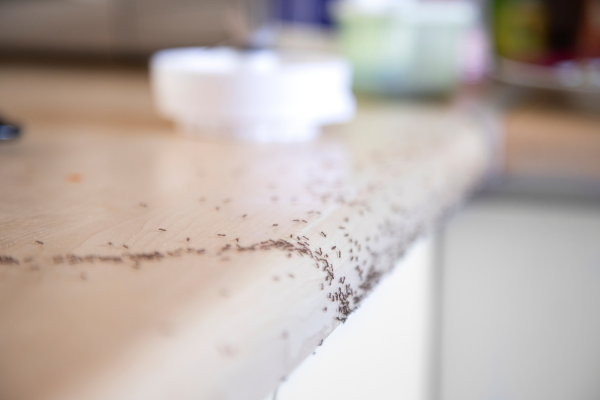
Once inside, ants look for spaces that provide warmth, moisture, and protection. Common nesting areas include wall voids near kitchens and bathrooms, spaces around water heaters and plumbing, areas under floors, gaps around windows, and insulation near heat sources. Ants indoors often gather near moisture, which is why sightings frequently happen around sinks, dishwashers, bathtubs, and leaky pipes. Worker ants also leave scent trails as they travel, so once one ant finds food or water, many others follow the same path. That is why a few ants can quickly turn into a steady line.
Common Winter Ants in Ohio
Carpenter Ants
Carpenter ants are among the largest ants found in Ohio homes. They are usually black and can reach about half an inch long. Rather than eating wood, they excavate it to build nests, often choosing wood that is damp or already softened.
Seeing carpenter ants indoors during winter is a strong sign that a nest exists inside the structure. Other warning signs include piles of fine, sawdust-like material mixed with insect parts, faint rustling sounds inside walls, and winged ants appearing indoors in late winter or early spring. Carpenter ants can weaken wood over time, which makes early identification important.
Pavement Ants
Pavement ants are small, dark brown to black ants that usually nest under sidewalks, driveways, and concrete slabs. Homes with slab foundations or heating lines running under the floor can give them enough warmth to stay active in winter. They often enter through cracks in basement floors or slab joints. Since the two species are easily confused, it helps to understand the differences between pavement and carpenter ants.
Odorous House Ants
These small, dark ants get their name from the rotten-coconut smell they give off when crushed. They commonly nest inside walls and under floors near moisture and can remain active indoors year-round.
Pharaoh Ants
Pharaoh ants are tiny, pale yellow to light brown ants that live almost entirely indoors. They are known to infest apartment buildings, hospitals, and other large structures, and they can stay active all winter in heated buildings.
Why Winter Ant Activity Should Not Be Ignored
It Often Means a Colony Is Inside
The ants you see are only a small portion of the colony. Workers leave the nest to find food and water, while the queen and developing ants stay hidden. If workers are active in winter, the nest is likely somewhere warm and nearby.
Some Ants Can Damage Your Home
Carpenter ants can hollow out structural wood over time. Because their nests are hidden inside walls, beams, and window frames, damage can progress without being noticed.
They Can Contaminate Food and Surfaces
Foraging ants travel across floors, drains, and trash before walking over counters, pantry items, and dishes. Pharaoh ants in particular have been documented carrying bacteria in hospital settings, which is one reason they are considered a serious indoor pest.
Store-Bought Sprays Can Make Things Worse
Spraying visible ants may reduce what you see for a short time, but it rarely reaches the nest or the queen. With certain species, it can make the problem harder to control. Pharaoh ant colonies, for example, can split into several new colonies when disturbed, a behavior known as budding. What started as one nest can spread to multiple areas of the home.
The Problem Can Carry Into Spring
Colonies that survive the winter indoors are in position to grow as temperatures rise. Many homeowners then see a noticeable increase in activity, especially in kitchens, which is one reason ants invade kitchens more often in early summer.
Why Identification Matters
Different ants have different nesting habits, food preferences, and behaviors. A plan that works for one species may be ineffective for another. A trained technician can identify the species, look for signs of where the colony is located, and recommend an approach suited to your home and the type of ant involved.
Ants in Your House in Winter? Contact Prevent Pest Control
If you are finding ants in your kitchen, bathroom, or basement during the colder months, it is a good time to have your home checked. Prevent Pest Control provides carpenter ant removal and ant control for Ohio homeowners, and our team can help you find out what is behind the activity you are seeing and eliminate ants in your home in winter.
Main Line: (440) 322-0887
Emergency Line: 440-610-5345
Contact Prevent Pest Control today to schedule your inspection.
Frequently Asked Questions
1. Why do I have ants in my house in winter?
Outdoor ant colonies go largely inactive in cold weather. Ants active indoors in winter usually belong to a colony nesting inside or right against a heated home.
2. Do ants hibernate in winter?
Ants do not truly hibernate, but outdoor colonies slow down and stay mostly inactive deep in the soil or inside logs until temperatures rise in spring.
3. How do ants get inside a house?
Ants commonly enter through foundation cracks, gaps around pipes and utility lines, worn door and window seals, openings under siding, and branches or shrubs touching the house.
4. What does it mean if I see carpenter ants in winter?
Carpenter ants seen indoors during winter strongly suggest a nest inside the structure. Other signs include sawdust-like debris, rustling in walls, and winged ants indoors in late winter or spring.
5. What kinds of ants are active indoors in Ohio during winter?
Carpenter ants, pavement ants, odorous house ants, and pharaoh ants can all be active indoors during winter when they are nesting in heated spaces.
6. Where do ants nest inside a house?
Ants often nest in wall voids near kitchens and bathrooms, around water heaters and plumbing, under floors, around windows, and in insulation near heat sources.
7. Can firewood bring ants into my home?
Yes. Firewood stored outdoors can contain carpenter ants, and bringing it inside can introduce them into your home.
8. Are winter ants harmful?
They can be. Carpenter ants can damage structural wood over time, and foraging ants can contaminate food, counters, and dishes.
9. Why don’t ant sprays solve the problem?
Sprays often kill only the ants you can see and rarely reach the nest or queen. Some species, like pharaoh ants, can split into multiple colonies when disturbed.
10. When should I call a professional about ants in winter?
If you see ants indoors during winter, it often means a colony is nearby. Prevent Pest Control can identify the species and help you address the source.

Prevent Pest Control has been proudly serving Ohio communities since 1996, delivering expert pest management solutions backed by over two decades of hands-on experience. Our skilled team is equipped to handle a full range of pest problems, from common household nuisances like ants and spiders to more serious infestations involving rodents, termites, and bed bugs.
We offer reliable, customized treatments for both residential and commercial properties, always focused on safety, effectiveness, and customer satisfaction. Our service area covers much of central and northern Ohio, including major cities such as Cleveland, Columbus, Dayton, and Cincinnati.
Contact Us
We are always here to help. Looking forward to hearing from you!