

As spring progresses in Ohio, many homeowners begin to notice increased activity from flying insects around their property. One of the most common concerns during late spring is the appearance of wasps. By May, it is common to see wasps flying around eaves, decks, sheds, and trees. This timing is not random. May is a critical period in the wasp life cycle, and it is when many species begin establishing new nests.
Understanding why wasps begin building nests during this time of year can help homeowners recognize early warning signs and take appropriate steps to protect their homes and families. Knowing what attracts wasps, where they prefer to build nests, and why professional pest control is often necessary can help prevent small nest beginnings from turning into larger seasonal problems.
The Seasonal Life Cycle of Wasps
To understand why wasps begin nesting in May, it is helpful to understand their seasonal life cycle. Most social wasps in Ohio follow an annual colony cycle that begins in spring and ends in late fall.
During winter, nearly all members of a wasp colony die off due to cold temperatures and lack of food. The only individuals that survive are fertilized queen wasps. These queens spend the winter months in protected areas such as tree bark, attic voids, sheds, wall cavities, and other sheltered spaces where they remain dormant until warmer temperatures return.
When temperatures begin to rise in early spring, these queens emerge from hibernation. Their primary goal is to locate a suitable nesting location where they can start a new colony. This process often begins in April and becomes more noticeable by May throughout Ohio.
Once a queen finds a suitable site, she begins constructing the first part of the nest. Early nests are small and usually contain only a few cells where eggs are laid. The queen cares for these first larvae herself until they mature into worker wasps that will take over the job of expanding the nest and gathering food.
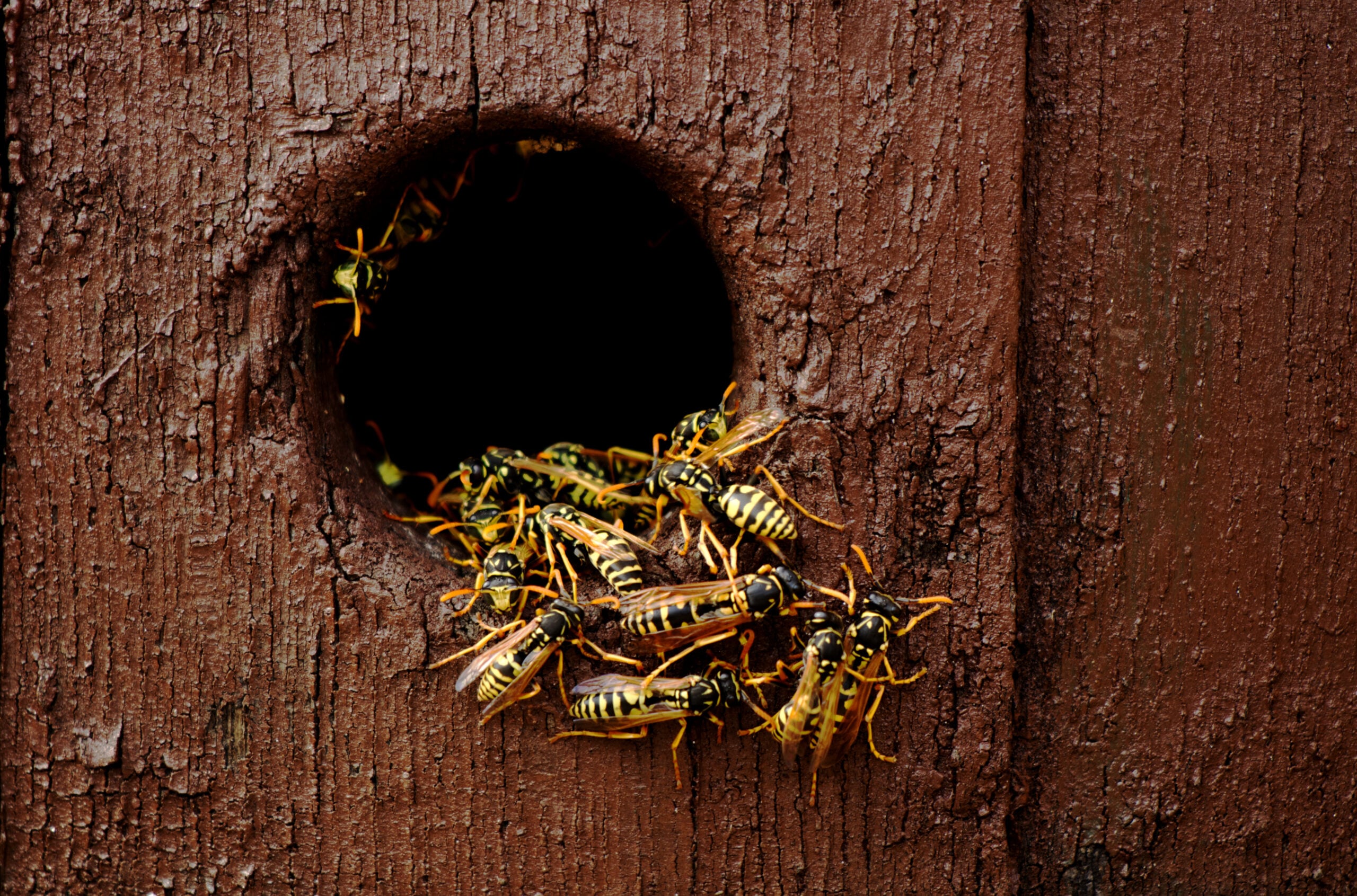 Why Are Wasps Building Nests in Spring
May typically offers ideal environmental conditions for wasp nest construction in Ohio. Several factors contribute to increased wasp activity during this time.
Warmer temperatures are one of the most important factors. As daytime temperatures consistently rise, wasp queens become more active and begin searching for stable nesting sites. These warmer conditions also allow larvae to develop more quickly once eggs are laid.
Food availability also increases during May. Flowering plants attract insects such as flies, caterpillars, and other small arthropods that worker wasps later hunt as food for their developing larvae. Abundant food sources help support the growth of new colonies.
Longer daylight hours also contribute to increased activity. With more time each day to forage and build, queens and newly emerged workers can expand nests at a faster pace.
Because of these environmental factors, May often marks the transition from solitary queen activity to early colony development. At this stage, nests are still relatively small but can grow rapidly as the season progresses.
Common Wasp Species Around Ohio Homes
Several species of wasps are commonly encountered around Ohio homes during spring and summer. Each species has slightly different nesting habits, but many share similar patterns of activity in May.
Paper wasps are among the most frequently seen species around homes. They build open, umbrella-shaped nests made of a papery material created by chewing wood fibers and mixing them with saliva. These nests are often attached to horizontal surfaces such as porch ceilings, eaves, railings, or window frames.
Yellowjackets are another common species in Ohio. Unlike paper wasps, yellowjackets typically build enclosed nests. Some nests are constructed underground in abandoned rodent burrows, while others may appear inside wall cavities or structural voids in buildings.
Bald-faced hornets, which are technically a type of yellowjacket, build large aerial nests that are often seen hanging from tree branches or attached to buildings. These nests are usually constructed later in the season but may begin developing in late spring.
Mud daubers are solitary wasps that also appear during warmer months. Instead of forming colonies, they build individual mud nests along walls, garages, or under roof overhangs. While they are generally less aggressive than social wasps, their nests can still become a nuisance when attached to homes.
Why They Choose Your Home: Wasps Building Nests in Spring
Many homeowners wonder why wasps frequently choose houses and other structures as nesting sites. The answer often comes down to shelter and protection.
Structures provide stable surfaces that are shielded from wind, rain, and predators. Roof overhangs, soffits, porch ceilings, attic vents, and window frames create protected areas where nests can remain undisturbed.
Homes also offer convenient access to food sources. Gardens, flowering plants, garbage bins, and outdoor dining areas can attract insects and food scraps that wasps use as nourishment for themselves and their larvae.
Another factor is warmth. Buildings absorb and retain heat from sunlight, which can create favorable microclimates for nest development. This can help larvae develop more efficiently compared to cooler outdoor environments.
Because of these advantages, homes often become prime real estate for newly awakened queen wasps looking for safe nesting locations.
Risks Associated With Wasp Nests
While wasps play an ecological role by helping control other insect populations, nests built close to homes can create safety concerns.
Wasps are capable of stinging when they feel their nest is threatened. Social species such as paper wasps, yellowjackets, and hornets may defend their nests aggressively if disturbed. This can present a risk to residents, visitors, children, and pets who unknowingly approach a nest.
Stings can cause pain and swelling, and some individuals may experience severe allergic reactions that require immediate medical attention. Because of this potential risk, wasp nests located near entryways, patios, or other high-traffic areas should be addressed carefully.
Attempting to remove a nest without proper knowledge or equipment can provoke defensive behavior and increase the likelihood of stings.
Why DIY Nest Removal Can Be Risky
- Many homeowners attempt to handle wasp nests themselves, especially when nests appear small in spring. However, DIY removal can sometimes create unexpected hazards.
- Wasps may react quickly if they perceive a threat to their nest. Even small nests may contain multiple individuals capable of defending the colony.
- In addition, some nests may be hidden inside walls, attics, or underground. Disturbing these nests without understanding their full structure can cause wasps to emerge in large numbers.
- Certain over-the-counter sprays may also be misapplied or used at the wrong time of day, increasing the risk of contact with defensive wasps.
For these reasons, professional pest control services are often the safest option when dealing with wasp nests located near homes.
Professional Wasp Control Services in Ohio
When wasp nests appear in difficult-to-reach locations or near high-traffic areas of a home, professional pest control services provide a safer and more reliable solution.
Trained technicians can identify the species involved, locate hidden nests, and determine the most appropriate removal strategy. Professional treatments are designed to address both visible nests and hidden colonies that may be developing inside structures.
Prevent Pest Control provides wasp inspection and treatment services for homeowners throughout Ohio, including the Cleveland area. Our technicians are experienced in identifying nesting sites and helping homeowners manage wasp activity around their property.
Schedule an Inspection: Wasps Building Nests in Spring
Prevent Pest Control provides professional wasp inspection and removal services for homeowners throughout Ohio. To schedule an inspection or learn more about our pest control services, call (440) 322-0887. Our team is here to help you identify wasp activity and keep your home protected throughout the spring and summer seasons.
Common FAQS About Wasp Nests
1. Why do wasps start building nests in May in Ohio?
May is when temperatures become consistently warm in Ohio, which encourages overwintered queen wasps to emerge from hibernation and begin building new nests for the season.
2. Where do wasps usually build nests around homes?
Wasps commonly build nests under roof eaves, porch ceilings, deck railings, sheds, attic vents, window frames, and tree branches where the structure provides protection from weather.
3. What types of wasps are common around Ohio homes?
Common species include paper wasps, yellowjackets, bald-faced hornets, and mud daubers. Each species has different nesting habits but many begin nesting in spring.
4. How can I tell if wasps are starting a nest near my house?
Frequent wasp activity in the same location, small papery structures under eaves, or wasps entering the same hole repeatedly can indicate that a nest is being built.
5. Why do wasps prefer houses for nesting?
Homes provide sheltered locations that protect nests from rain and wind. Roof overhangs, siding gaps, and attic spaces offer stable surfaces that help colonies grow safely.
6. Are wasp nests smaller in the spring?
Yes. Early in the season, nests are usually small because only the queen is building and maintaining the structure. Colonies grow larger once worker wasps emerge.
7. Are wasps dangerous around homes?
Wasps can sting if they feel threatened or if their nest is disturbed. Nests located near doorways, patios, or high-traffic areas may pose a risk to residents and pets.
8. Can removing a small wasp nest in spring prevent bigger problems later?
Addressing nest activity early can help prevent larger colonies from forming later in summer when nests become more populated and more difficult to manage.
9. What attracts wasps to my yard?
Wasps are attracted to food sources such as insects, flowering plants, outdoor food, sugary drinks, and garbage containers. Shelter and protected nesting areas also attract them.
10. When should I call a professional for wasp control?
If a nest is located in a hard-to-reach place, inside walls, underground, or near entryways, contacting a pest control professional is often the safest way to address the problem.

Prevent Pest Control has been proudly serving Ohio communities since 1996, delivering expert pest management solutions backed by over two decades of hands-on experience. Our skilled team is equipped to handle a full range of pest problems, from common household nuisances like ants and spiders to more serious infestations involving rodents, termites, and bed bugs.
We offer reliable, customized treatments for both residential and commercial properties, always focused on safety, effectiveness, and customer satisfaction. Our service area covers much of central and northern Ohio, including major cities such as Cleveland, Columbus, Dayton, and Cincinnati.
Contact Us
We are always here to help. Looking forward to hearing from you!