
Finding a yellow jacket nest near house entrances, patios, walkways, or other frequently used areas can create a safety concern for homeowners. Yellow jackets are social wasps that defend their nests when they perceive a threat, and multiple insects may respond when the colony is disturbed. Prevent Pest Control confirms that yellow jackets are among the exterior pests it treats in Ohio.
In October, homeowners may still notice yellow jacket activity around their properties. Rather than immediately approaching, spraying, blocking, or attempting to remove a nest, the first priority should be identifying where the insects are traveling and keeping people and pets away from the area.
First, Confirm That You Are Dealing With Yellow Jackets
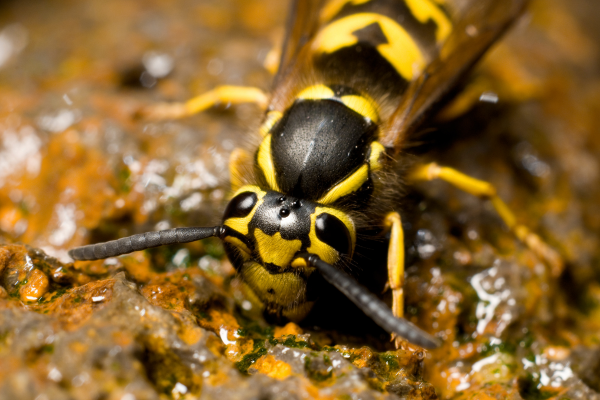
Not every yellow-and-black flying insect around a home is a yellow jacket. Bees, paper wasps, hornets, and yellow jackets can sometimes be confused with one another, yet their nesting habits and behavior differ.
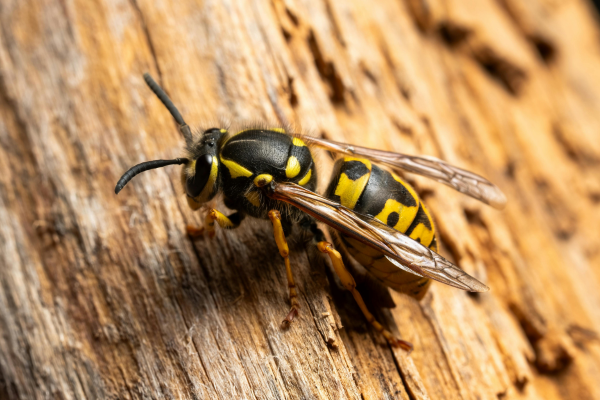
Yellow jackets generally have compact bodies with distinctive black-and-yellow markings. Their nests may be underground, inside wall voids, in attics, or within other protected cavities. Only an entrance hole may be visible when the colony is concealed. Prevent Pest Control’s guide to identifying bees, wasps, hornets, and their nests explains some of the differences homeowners may notice.
If you believe you have a yellow jacket nest near house structures, observe from a safe distance rather than getting close enough to inspect the nest opening directly.
 Watch Where the Yellow Jackets Are Entering and Leaving
One useful clue is repeated traffic to the same location. Yellow jackets may fly in and out of a hole in the soil, an opening around a structure, or another sheltered location containing the nest.
Observing their flight path from a safe location may help determine where activity is concentrated. Avoid standing directly in front of the entrance or blocking their route.
A nest does not have to be plainly visible to be active. If numerous insects repeatedly disappear into the same small opening, there may be a concealed nesting site. This is particularly important when a yellow jacket nest near house walls, steps, decks, landscaping, or walking areas is suspected.
Keep Children and Pets Away From the Area
Once a likely nest location has been identified, limit activity nearby. Avoid mowing, trimming vegetation, digging, moving stored objects, or performing other work close to the entrance until the situation has been evaluated.
Children and pets may unknowingly approach a nest or disturb the surrounding area. Marking the general area from a safe distance can help other household members recognize where they should not walk or play.
Yellow jackets can defend their nest when disturbed, so repeatedly approaching the entrance to take a closer look is unnecessary. Prevent Pest Control advises avoiding bee, wasp, and hornet nesting areas while waiting for professional assistance.
Do Not Swat at Yellow Jackets Near the Nest
Swatting at individual yellow jackets may increase the likelihood of an encounter, particularly when you are already close to their nesting area. Instead, move calmly away from the location.
Outdoor food and drinks may also attract wasps. Trash, fallen fruit, food residue, and sugary beverages can encourage yellow jacket activity around patios and other residential spaces. Prevent Pest Control provides additional information about what attracts wasps around Ohio homes.
Keeping food covered and cleaning outdoor eating areas may reduce unnecessary wasp activity, although these steps will not eliminate an established yellow jacket nest near house structures.
Avoid Disturbing an Underground Nest
Yellow jackets commonly use protected underground spaces. Homeowners sometimes discover a nest only after seeing repeated insect traffic near a small opening in the lawn or landscaping.
Do not dig into the opening, place objects over it, or intentionally disturb the surrounding ground. Vibrations from lawn equipment and other activity near a nesting area can disturb the colony.
An underground nest may extend beyond what can be seen from the surface. The entrance itself does not show the full size or location of the nest, which is another reason to avoid trying to investigate it manually.
Be Careful With Nests Inside Walls or Other Voids
A yellow jacket nest near house siding, soffits, or other structural areas may actually be located inside a concealed cavity. Homeowners may notice insects repeatedly entering through one opening without being able to see the nest itself.
Avoid immediately closing an active opening. If yellow jackets are already nesting inside a structure, blocking their normal route may not remove the insects that remain inside the concealed space.
Structural repairs and sealing openings are separate home-maintenance tasks. Prevent Pest Control should not be expected to repair siding, close holes, or make building improvements as part of pest treatment. Any necessary repairs should be considered separately after pest activity has been appropriately addressed.
Do Not Assume October Means the Nest Is Inactive
Cooler fall weather can change wasp behavior, but a nest should not automatically be considered inactive because the calendar has reached October. Activity can vary with weather conditions and the location of the colony.
In Ohio, homeowners may continue noticing wasps around homes as summer transitions into fall. Prevent Pest Control discusses seasonal activity and ways these insects may approach structures in its resource on preventing wasps from moving indoors.
If yellow jackets are still actively entering and leaving a location, treat the area as an active nest regardless of the month.
Reduce Outdoor Food Sources Without Approaching the Nest
Homeowners can take general steps around the property without disturbing the nesting site. Keep trash containers covered, clean food residue from outdoor dining areas, pick up fallen fruit when it can be done safely, and avoid leaving open sugary drinks outside.
These measures may help make patios and gathering spaces less attractive to foraging wasps. However, sanitation does not remove an established colony.
When dealing with a yellow jacket nest near house, prevention measures and nest management should be viewed as separate concerns. Reducing food sources may decrease some activity around people, while the nest itself may still require attention.
Be Especially Cautious Around Frequently Used Areas
Nest location matters. Yellow jackets near an unused corner of a large property present a different practical concern from insects entering and leaving a nest beside the front steps.
Greater caution may be appropriate when nests are located near:
- Exterior doors
- Walkways
- Patios and decks
- Children’s play areas
- Driveways
- Frequently used yard areas
- Outdoor workspaces
Repeated traffic through these locations can increase the chance that someone inadvertently gets too close to the nest.
If a household member has a known severe allergy to insect stings, minimizing exposure becomes particularly important. A sting-related medical emergency should be addressed through appropriate medical or emergency resources rather than pest-control guidance.
 When Professional Pest Control May Be Appropriate
Professional evaluation may be appropriate when a yellow jacket nest near house entrances, walkways, walls, landscaping, or other frequently used areas cannot be safely avoided. It may also be useful when the exact nest location is unclear or the insects appear to be entering a concealed structural space.
Prevent Pest Control specifically lists exterior treatment for yellow jackets, wasps, and hornets, and its dedicated bee, wasp, and hornet service information confirms that the company addresses these pests on residential properties.
Avoiding unnecessary contact with the colony while arranging assistance is generally safer than repeatedly disturbing the nest or experimenting with different removal methods.
Contact Prevent Pest Control About Yellow Jacket Activity
If you discover a yellow jacket nest near house entrances, outdoor living spaces, landscaping, or another area your household regularly uses, keep your distance and limit activity around the nest. Prevent Pest Control provides pest control for yellow jackets and other stinging insects in Ohio. To discuss yellow jacket activity at your property, contact Prevent Pest Control through our website or call (440) 322-0887.
Frequently Asked Questions
1. How can I tell if a yellow jacket nest is active?
An active nest usually has repeated yellow jacket traffic entering and leaving the same opening. Activity may be easiest to notice during warmer parts of the day. Avoid standing directly in the flight path or getting close enough to inspect the entrance by hand, especially if the nest is underground or inside a structural void.
2. Are yellow jacket nests more dangerous when they are close to a doorway?
A nest near a doorway can create a greater practical concern because people may repeatedly pass close to the colony. Frequent foot traffic, door movement, vibrations, or accidental contact may disturb yellow jackets. If a yellow jacket nest near house entrances cannot be safely avoided, professional evaluation may be appropriate.
3. Can yellow jackets build nests inside house walls?
Yes, yellow jackets can sometimes nest inside wall voids or other protected structural spaces. Homeowners may notice insects repeatedly entering through a small exterior opening even when the nest itself is not visible. Avoid sealing an active opening before the pest activity has been addressed, because insects may remain inside the concealed space.
4. Should I cover an underground yellow jacket nest?
No, covering or plugging an active underground nest is generally not recommended as a do-it-yourself response. Yellow jackets may become defensive when their entrance is disturbed, and the nest can extend beyond the visible opening. Keep people and pets away from the area and avoid digging, mowing, or using equipment nearby.
5. Why are yellow jackets still active around my Ohio home in October?
Yellow jackets may remain active in October when weather conditions are still suitable. Seasonal activity does not stop on a specific calendar date, and colonies in protected areas may continue showing visible traffic. If insects are still entering and leaving a nest, homeowners should treat it as active rather than assuming cooler fall weather has eliminated the concern.
6. Can outdoor food attract yellow jackets even if the nest is elsewhere?
Yes, outdoor food and sugary drinks can attract foraging yellow jackets even when their nest is located elsewhere. Open trash containers, fallen fruit, food residue, and beverages may draw them toward patios or gathering spaces. Cleaning these sources may reduce foraging activity but will not remove an established nest.
7. What should I do if I accidentally disturb a yellow jacket nest?
Move away from the area calmly and quickly without swatting at the insects. Get indoors or into another protected location if possible. Once the immediate activity has settled, keep others away from the nest area. Anyone experiencing a serious reaction after a sting should seek appropriate medical or emergency assistance.
8. Is a yellow jacket nest near the house always necessary to remove?
Not every nest creates the same level of risk, but location and activity matter. A nest far from normal household activity may present a different concern from one beside a walkway, deck, play area, or entrance. Professional advice may be useful when the colony cannot be safely avoided or its location is uncertain.
9. Will sealing cracks prevent yellow jackets from nesting near my home?
Sealing appropriate exterior openings may help reduce future access, but it should be treated as a separate home-maintenance task rather than an immediate response to an active nest. An active opening should not simply be closed while yellow jackets remain inside. Prevent Pest Control does not perform structural repairs, sealing, or home improvements.
10. When should I contact pest control for a yellow jacket nest?
Consider contacting pest control when a yellow jacket nest near house entrances, walkways, walls, landscaping, or other frequently used areas cannot be safely avoided. Professional assistance may also be appropriate when the nest is concealed or difficult to locate. Prevent Pest Control can be reached at (440) 322-0887 to discuss yellow jacket activity.

Prevent Pest Control has been proudly serving Ohio communities since 1996, delivering expert pest management solutions backed by over two decades of hands-on experience. Our skilled team is equipped to handle a full range of pest problems, from common household nuisances like ants and spiders to more serious infestations involving rodents, termites, and bed bugs.
We offer reliable, customized treatments for both residential and commercial properties, always focused on safety, effectiveness, and customer satisfaction. Our service area covers much of central and northern Ohio, including major cities such as Cleveland, Columbus, Dayton, and Cincinnati.
Contact Us
We are always here to help. Looking forward to hearing from you!